Porktoberque

Category: Researched Guides

  • How to Compare Texas BBQ Festivals and Barbecue Events

    How to Compare Texas BBQ Festivals and Barbecue Events

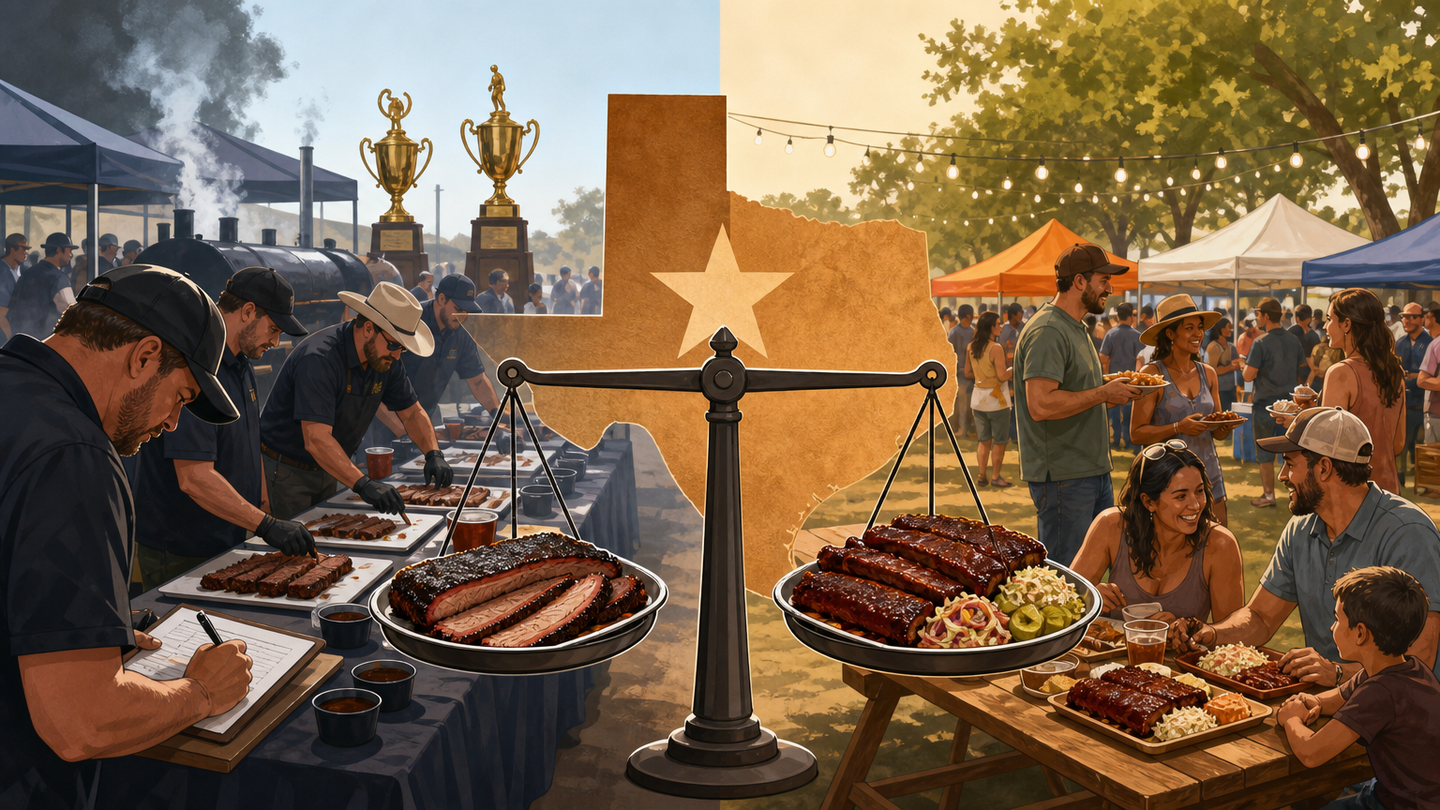
    A Texas barbecue event can mean very different things depending on what is at its center. One gathering may be built around a judged cook-off, another around tasting barbecue from a group of established joints, and another around the social energy of a larger celebration. Knowing that distinction makes it easier to choose an event that fits the day you want—not merely one with barbecue in its name.
    Supporting editorial scene for How to Compare Texas BBQ Festivals and Barbecue Events
    How to Compare Texas BBQ Festivals and Barbecue Events: supporting editorial illustration.

    Two useful reference points show the range. The World’s Championship Bar-B-Que Contest, presented by the Houston Livestock Show and Rodeo, is an invitation-only competition with designated public venues for visitors. BBQ Fest in Lockhart, a Texas Monthly live event, has included a Top 50 Picnic format featuring barbecue joints from across Texas. Both belong in a Texas barbecue calendar, but they reward different kinds of visitors.

    Defining the Alternatives

    Competition-centered cook-offs

    A cook-off is organized around teams competing in barbecue categories. The food, equipment, team spaces, judging, and contest rules shape the event’s identity. For a visitor, the appeal is often the chance to see barbecue as a craft performed in public: smoke rising from pits, teams working through service and presentation, and a setting with a strong communal rhythm.

    The World’s Championship Bar-B-Que Contest illustrates an important distinction within this category. Its competition is invitation-only, so the event should not be viewed as an open field of teams that every visitor can freely enter or sample. Public venues are identified for guests, giving visitors a defined way to participate while the contest itself retains its competitive structure.

    Choose a competition-centered event when the atmosphere, the tradition of the cook-off, and the spectacle of teams at work matter as much as tasting a broad selection of barbecue. It is particularly suited to someone who enjoys the social side of barbecue culture and does not expect every cooking area to function like a public tasting station.

    Tasting-centered barbecue festivals

    A tasting festival puts the visitor’s eating experience closer to the foreground. Rather than asking guests to navigate a competition environment, it gathers participating barbecue businesses or cooks into a shared festival format. The earlier BBQ Fest program’s Top 50 Picnic is a clear example: barbecue joints from across Texas were part of the occasion.

    This format is a strong fit for a diner whose main goal is comparison. The practical pleasure is moving from one style, pit, or restaurant approach to another and forming a personal opinion about what stands out. A visitor may care about brisket at one stop, sausages at another, or the contrast between familiar regional traditions and something less expected.

    A festival lineup can change from one edition to another, so the concept matters more than assumptions about any single participant. Think of this option as a barbecue tasting occasion first and a broader event second.

    Meaningful Differences to Compare

    The most useful comparison is not “Which event is better?” It is “What kind of barbecue day do I want?” Start with the event’s primary purpose.

    At a competition, barbecue is both food and performance. Teams are pursuing results within a contest, and visitor access may be shaped by the event’s public areas and policies. The experience can feel immersive because the work of cooking is part of what you are there to see.

    At a tasting festival, barbecue is more directly the object of discovery. The value comes from range: multiple participating joints, multiple approaches, and the opportunity to notice differences side by side. A format such as the Top 50 Picnic encourages a broad view of Texas barbecue rather than attention on a single team or pit.

    Scale is another meaningful difference, but it should not be mistaken for quality. A large event can offer a powerful sense of occasion, while a more concentrated tasting format can make food comparison feel like the central activity. Neither approach automatically produces a better visit. The right choice depends on whether you want an event you happen to eat at or an eating experience presented as an event.

    Access also deserves careful attention. “Public” does not always mean that all parts of an event work the same way. The Houston contest’s invitation-only structure, paired with designated public venues, is a reminder to distinguish between attending an event and entering each team’s space. That distinction can shape expectations before you arrive.

    Practical Tradeoffs

    A competition setting may reward a relaxed approach. There can be plenty to absorb beyond a plate of barbecue: team identity, the pace of pit work, and the feeling of being surrounded by a major cook-off. In return, a visitor should be comfortable with the fact that access and food availability can be structured differently from a tasting festival.

    A tasting-focused gathering makes more sense when your priority is deliberate sampling. It is easier to turn the day into a personal barbecue survey: try smaller portions where possible, share tastes with companions, and pay attention to contrasts instead of filling up immediately. The tradeoff is that the contest element may be less central, or absent altogether.

    Your group changes the equation as well. A barbecue enthusiast who wants to talk pits and observe teams may gravitate toward a cook-off. Friends who want to compare several respected barbecue stops may prefer the tasting-festival model. For a mixed group, decide whether the day’s anchor is social spectacle or focused eating; that simple choice prevents mismatched expectations.

    Avoid treating a famous event name as a guarantee of a particular experience. A title may emphasize championship competition, while a program may emphasize a shared meal among participating joints. Read the event description for the activity it actually highlights: teams and contest structure, participating restaurants, designated public spaces, or a named tasting program.

    Making the Decision

    Pick a competition-centered event if you want barbecue culture in motion. The Houston contest is a useful model for this choice: it is tied to a major rodeo organization, organized as an invitation-only contest, and provides identified public venues for visitors. Go with the expectation that you are attending a competition environment rather than a simple all-purpose barbecue tasting.

    Choose a festival built around participating barbecue joints if the goal is to taste across Texas in one setting. BBQ Fest in Lockhart is the useful model here, especially given its prior Top 50 Picnic format. This is the better match for a visitor who wants to make comparisons plate by plate and come away with a broader sense of different barbecue approaches.

    When both sound appealing, let your priority break the tie. Choose smoke, teams, and contest-pageantry for the cook-off experience. Choose variety, direct tasting, and side-by-side food exploration for the festival experience. Texas barbecue is large enough to hold both traditions, and each reveals a different side of why people gather around a pit.

    Confirm the current visitor policies, participating venues, and program details with the event’s official information before making plans. The best Texas barbecue event for you is the one whose format matches the experience you actually want: competition spectacle, a wide tasting opportunity, or a little of each.

    Information may contain errors, omissions, or outdated details. Confirm time-sensitive information with the relevant official or authoritative source.
  • Your First Texas BBQ Festival: What to Expect and How to Enjoy It

    Your First Texas BBQ Festival: What to Expect and How to Enjoy It

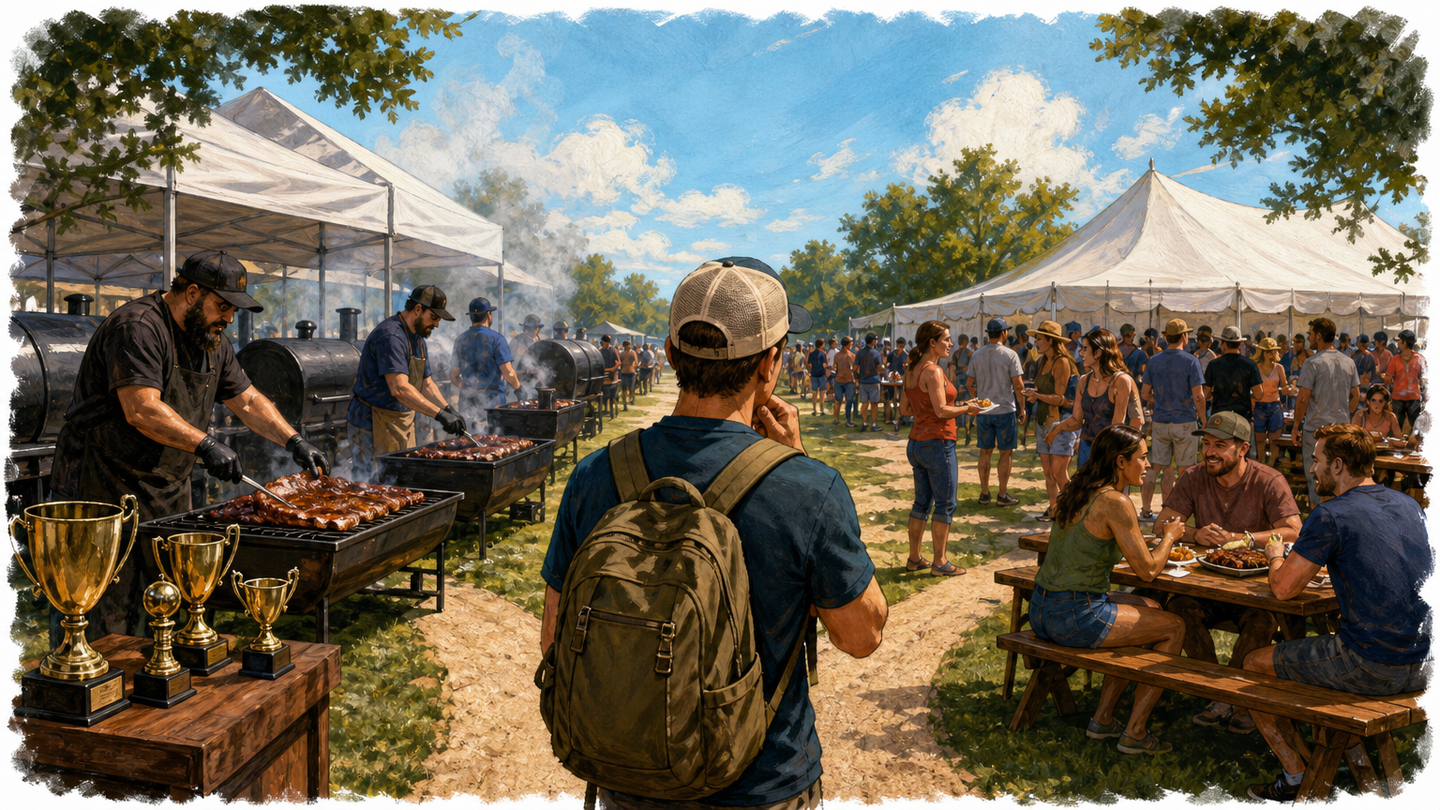
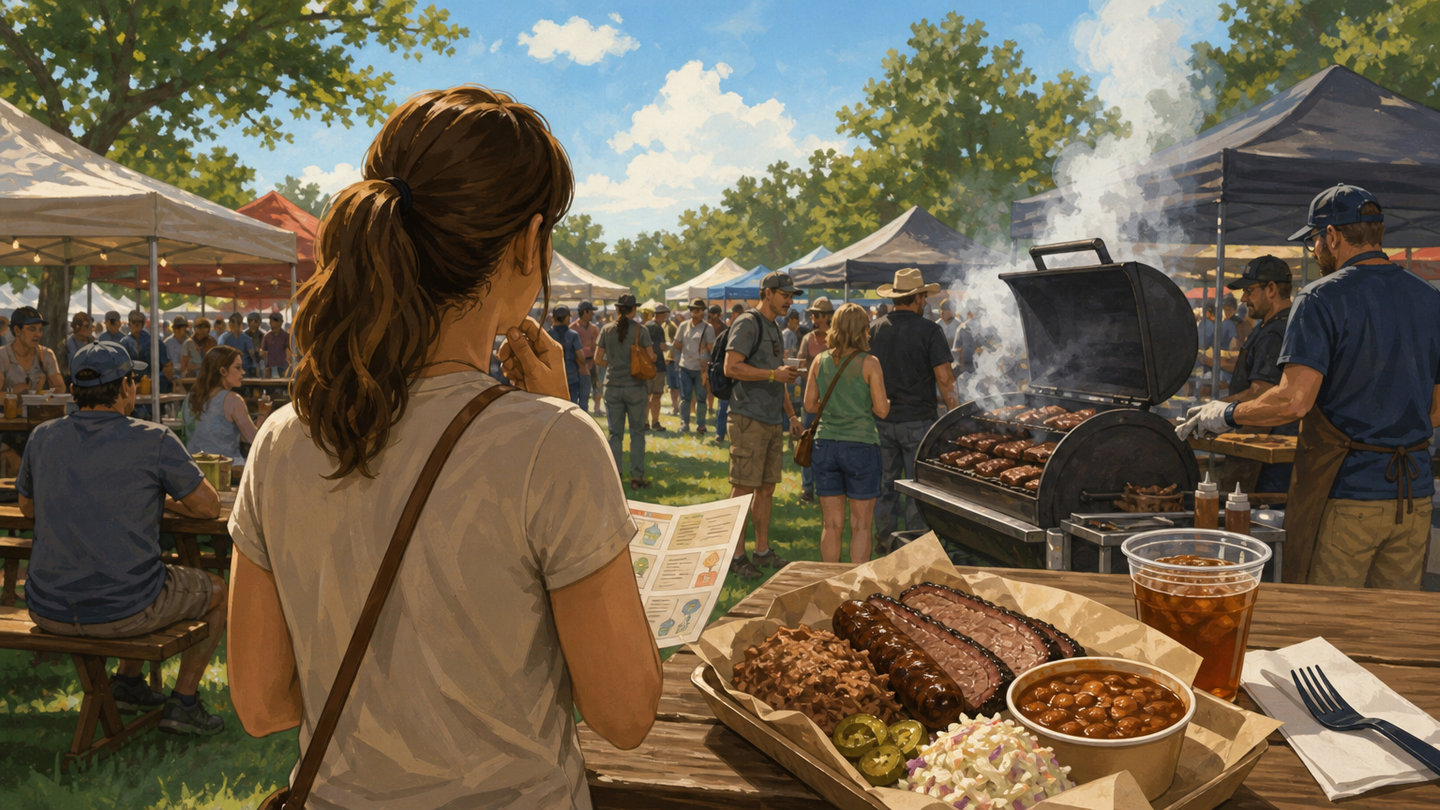
    A Texas barbecue festival is more than a place to eat a plate of brisket. It is a chance to experience the many ways barbecue is cooked, served, judged, and celebrated across the state. For a first-time visitor, the scale can be surprising: smoke in the air, long lines at popular pits, cooks working around live fires, and crowds comparing bites with the seriousness usually reserved for sports.

    Supporting editorial scene for Your First Texas BBQ Festival: What to Expect and How to Enjoy It
    Your First Texas BBQ Festival: What to Expect and How to Enjoy It: supporting editorial illustration.

    The best approach is to treat the event as an experience rather than a mission to taste absolutely everything. Arrive curious, pace yourself, and leave room for the styles and stories that make Texas barbecue worth gathering around.

    Before the First Experience

    Texas barbecue events do not all work the same way. Some are festivals built around tasting from a collection of barbecue restaurants. BBQ Fest in Lockhart, for example, has featured a Top 50 Picnic format that brought together barbecue joints from across Texas. An event like that gives a newcomer a broad snapshot of the state’s barbecue landscape in one outing.

    Other gatherings center on teams competing in a cook-off. The World’s Championship Bar-B-Que Contest, presented by the Houston Livestock Show and Rodeo, is an invitation-only competition. That distinction matters: a contest can have active cook teams and private areas while also providing designated public places for visitors to enjoy food, music, and the atmosphere.

    Knowing which kind of event you are attending shapes your expectations. A tasting-focused festival is often about sampling work from many established barbecue businesses. A competition is often about watching the culture of cooking teams, pits, camaraderie, presentation, and judging unfold. Both can be memorable, but they offer different paths into barbecue.

    Do not build your day around the idea that one bite will settle what “real” Texas barbecue is. Texas barbecue has recognizable traditions, yet individual cooks and restaurants bring their own seasoning, wood, timing, meat selection, and serving style. A festival makes those differences easier to notice because you can try several approaches in a relatively short span.

    What to Expect at Texas Barbecue Events

    Expect smoke, heat, crowds, and a great deal of anticipation around the food. Barbecue is slow cooking presented at a busy public gathering, so the rhythm of the day can feel different from a standard restaurant meal. A line is often part of the experience, especially when people have gathered to try a particular pit or a limited offering.

    The most useful skill is pacing. Start with smaller portions where possible, share tastes with companions, and pause between stops. Brisket is rich, ribs can be filling, and sausage, turkey, chicken, sides, and desserts add up quickly. Trying a manageable number of items with attention is more satisfying than racing through a long list and losing track of what you enjoyed.

    Pay attention to the details in each serving. With brisket, notice the contrast between the dark exterior bark and the interior, along with the balance of smoke, seasoning, rendered fat, and beef flavor. With ribs, look for meat that is tender enough to bite cleanly while still holding its shape. Sausage offers another useful comparison point: the casing, seasoning, texture, and smokiness can vary widely from one maker to another.

    Sides are not merely a break from meat. Beans, potatoes, bread, pickles, onions, and other accompaniments can show how a barbecue operation thinks about balance. Tangy or sharp elements can cut through richer bites, while a simple slice of bread can be part of the familiar barbecue table rather than an afterthought.

    At a cook-off, the food may not be distributed in the same open, festival-style pattern that a newcomer expects. Some team spaces may be private, and public access can be organized around particular venues or activities. That is normal for an invitation-only contest. Enjoy the public portions for what they are instead of assuming every smoker or team area functions as a walk-up restaurant.

    Questions Worth Asking

    A good barbecue event rewards a few practical questions before you go. First, ask what the admission format includes. Some events are structured around tastings, while others may have separate food arrangements, public areas, or competition-related access. Understanding the format prevents disappointment and helps you plan how you will eat.

    Ask whether the event is principally a festival, a competition, or a blend of both. This tells you whether your day is likely to revolve around sampling, watching cooks, listening to music, seeing demonstrations, or moving between several activities. It also clarifies why some areas may have different access rules.

    Ask what food is actually available to the public and how it is served. A restaurant-focused gathering may make it easy to compare many barbecue joints, while a contest may showcase teams without making every team’s food generally available. There is no wrong format; it simply changes the kind of experience on offer.

    If you are attending with family or friends, talk about goals before you arrive. One person may want to seek out brisket, another may care most about sausage or sides, and someone else may want the social scene. A loose plan keeps the group from waiting in the same line all day and gives everyone a reason to share what they discover.

    Finally, ask yourself what you want to learn. You might compare bark, smoke, tenderness, sauces, or side dishes. You might want to see how cooks build community around their pits. Giving the day a simple focus turns a large, lively event into something easier to navigate.

    Starting With Confidence

    Your first Texas barbecue festival does not require expert knowledge or a perfected tasting strategy. Begin with an open mind and choose a few things to try deliberately. Take a moment to notice what you like: a peppery crust, a pronounced smoke flavor, a snappy sausage casing, a vinegary pickle, or a side that brings welcome contrast to the meat.

    It also helps to accept that barbecue is social food. People discuss it, defend favorite styles, and disagree about what deserves the longest line. Join the conversation without feeling pressured to have a final verdict. A personal favorite is enough, and it may change as you try barbecue from more cooks and more parts of Texas.

    The event itself is part of the pleasure. In a festival setting, the variety of participating barbecue joints can reveal how broad the state’s barbecue culture is. In a contest setting, the sight and sound of teams cooking can reveal the collaborative, competitive side of the tradition. Either way, you are seeing barbecue as a shared public ritual, not only as a meal.

    Check the official event information shortly before you go, since access, programming, and food arrangements can change. Then arrive hungry but not rushed, sample with intention, and let your first gathering be the beginning of a longer Texas barbecue education.

    Information may contain errors, omissions, or outdated details. Confirm time-sensitive information with the relevant official or authoritative source.
  • A Guide to BBQ Festivals and Barbecue Events Across Texas

    A Guide to BBQ Festivals and Barbecue Events Across Texas

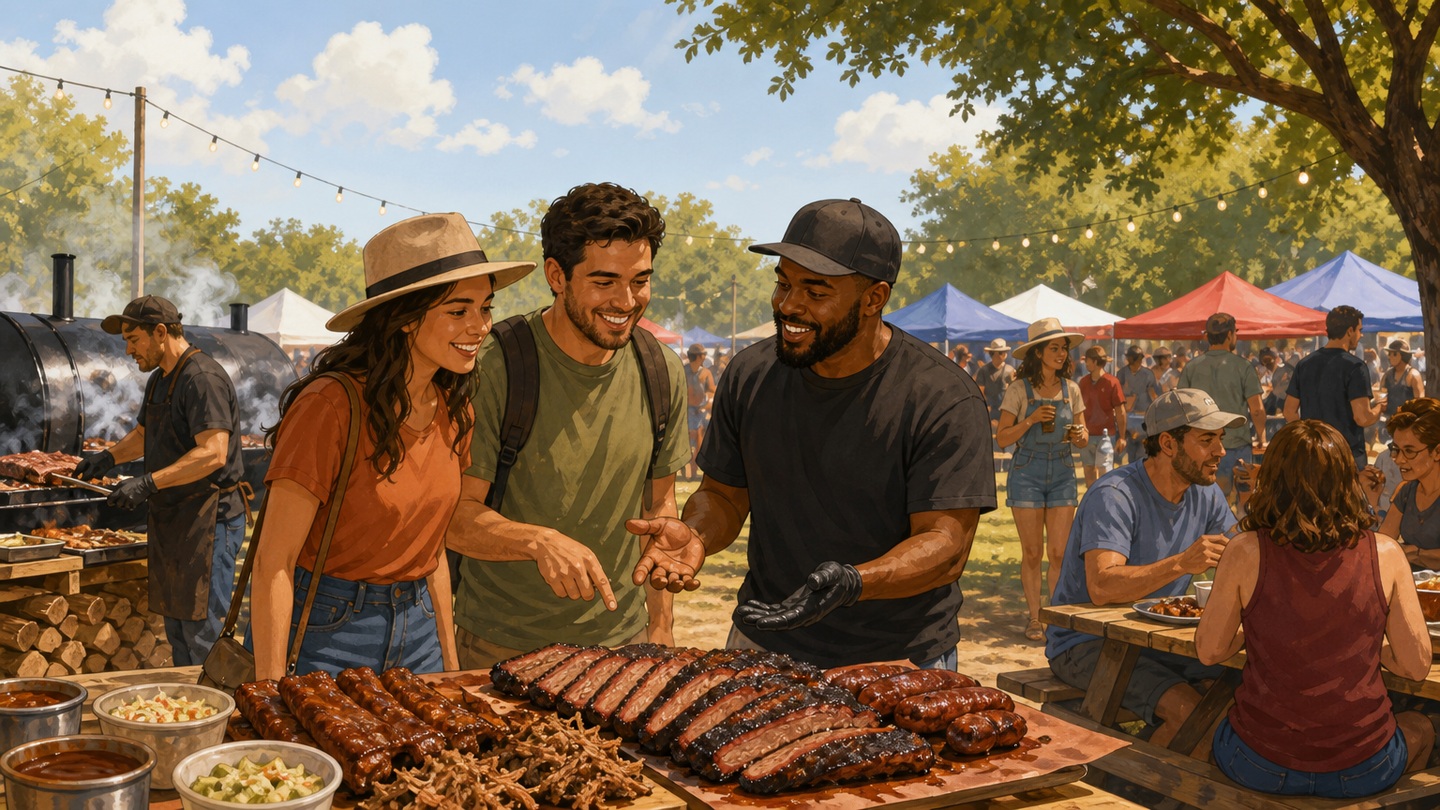
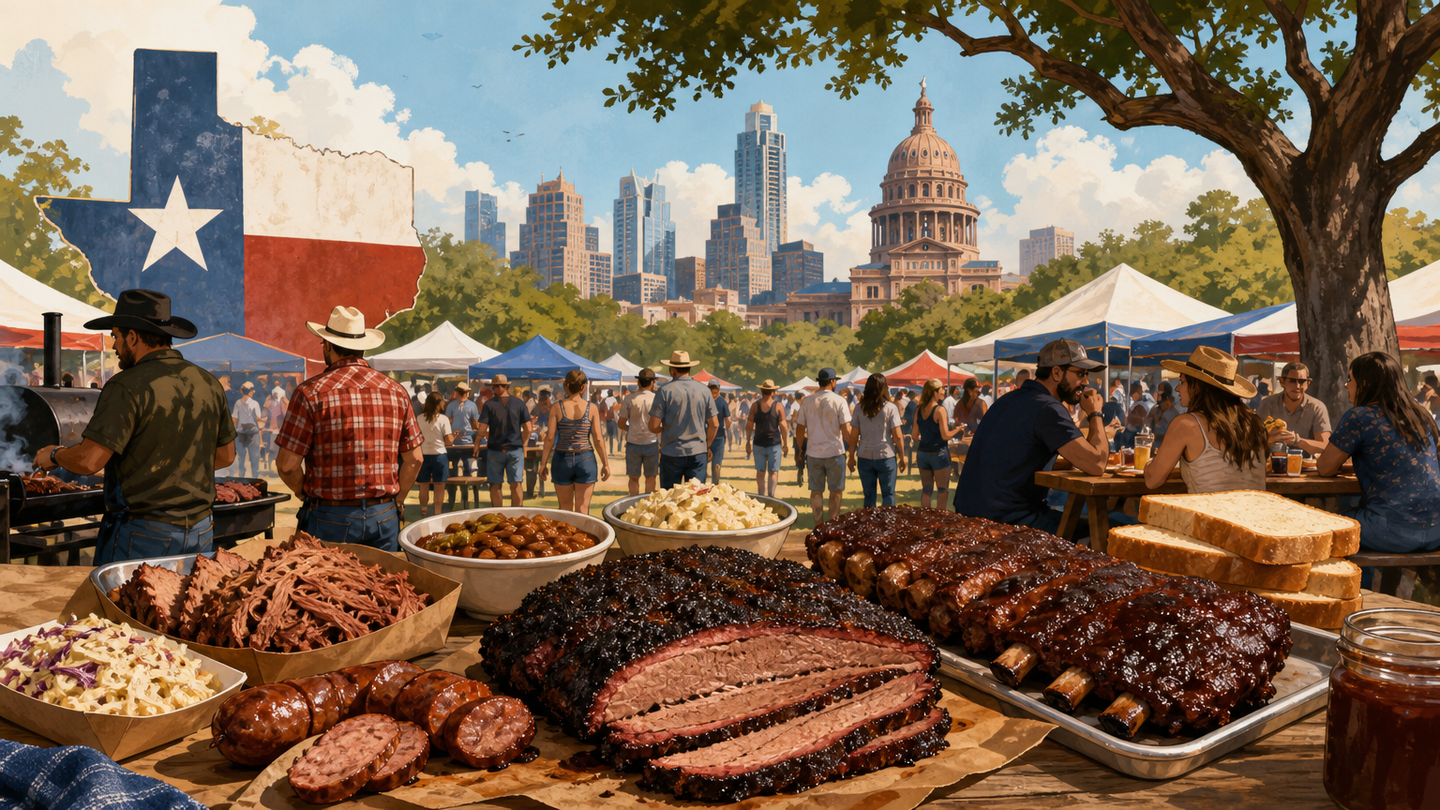
    Texas barbecue events turn a meal into a shared occasion. Some are built around serious cook-off competition; others are designed for tasting barbecue from many respected joints in one outing. Together, they give visitors a useful way to experience the range of Texas barbecue culture: the craft of cooking over fire, the regional pride behind each pit, and the sociable pleasure of gathering around smoked meat.

    Supporting editorial scene for A Guide to BBQ Festivals and Barbecue Events Across Texas
    A Guide to BBQ Festivals and Barbecue Events Across Texas: supporting editorial illustration.

    The best event for you depends less on finding the biggest name than on knowing what kind of experience you want. A competition, a tasting festival, and a barbecue-centered public celebration can all be memorable, but they ask different things of the visitor. Once you understand those differences, it is much easier to choose an outing that suits your appetite, pace, and travel plans.

    Understanding Texas Barbecue Events

    A barbecue cook-off or championship is centered on the cooking teams. The focus is the process as much as the finished food: pits, smoke, preparation, presentation, and the friendly intensity of competition. These gatherings can feel like a temporary community of cooks and supporters, with each team bringing its own traditions and style.

    The World’s Championship Bar-B-Que Contest in Houston is a prominent example. Presented by the Houston Livestock Show and Rodeo, it is an invitation-only competition rather than an open tasting field where every cook team serves the general public. That distinction matters. Visitors can enjoy designated public venues, but access and food opportunities are shaped by the event’s structure. It is a strong choice for someone who wants to see the scale and spirit of a major Texas barbecue contest, not simply sample from every competing pit.

    Tasting-focused festivals put the guest’s plate at the center. BBQ Fest in Lockhart, a Texas Monthly live event, represents this side of the calendar. A previous program included a Top 50 Picnic that brought barbecue joints from across Texas together. The appeal of a format like this is comparison: in a single setting, visitors can taste work from multiple barbecue businesses and notice how seasoning, smoke, texture, and side dishes vary from one stop to the next.

    Neither format is inherently better. Competition events emphasize the communal spectacle surrounding barbecue; tasting festivals emphasize breadth and direct eating. Texas barbecue celebrations may also combine food with entertainment, family activities, vendors, or other programming. Think of barbecue as the reason for the gathering, then look at how the gathering is organized.

    Choosing an Event That Fits Your Style

    Start with your main goal. If you are drawn to pit craft, team culture, and the excitement of judging, a cook-off can be a better fit than a tasting festival. You may spend as much time watching, walking, and taking in the atmosphere as you do eating. That is part of the point: barbecue is being treated as a live craft and a competitive tradition.

    If your goal is to learn what makes Texas barbecue so varied, prioritize an event where multiple established joints serve food to attendees. Sampling several plates close together gives you a clearer sense of contrast than eating one large meal. You might notice a brisket that leans heavily on smoke, another that foregrounds beef flavor, or side dishes that reveal how differently barbecue operations approach the rest of the tray.

    Consider the Scale You Want

    Large, high-profile events bring energy, visual spectacle, and an especially broad cross-section of attendees. They can also require more patience. Crowds, lines, walking, and sensory bustle are often inseparable from the experience. Go with an expectation that the event itself—not only the food—will occupy the day.

    A smaller or more focused event may feel easier to navigate and more conducive to unhurried conversation and tasting. The trade-off can be a narrower range of barbecue or fewer activities around it. For families, first-time festival-goers, and visitors who prefer a calmer pace, that trade-off may be worthwhile.

    Decide Whether You Want Discovery or Familiarity

    A festival featuring many barbecue joints is ideal for discovery. It can introduce you to places you would not otherwise visit and help you decide which smokehouse deserves a future road trip. Approach it with curiosity rather than a mission to eat everything.

    A cook-off can offer a different kind of familiarity: a closer view of how deeply barbecue brings people together. You may not leave with a definitive ranking of meats, but you can come away with a better feel for the pride, ritual, and generosity that surround Texas barbecue gatherings.

    Practical Considerations for a Better Visit

    The first planning question is access. Some events sell admission designed around tasting; others have public areas alongside private team spaces. Do not assume that a competition ticket or public entry automatically means access to every cook team or every food offering. The World’s Championship Bar-B-Que Contest is a useful reminder that even a very public barbecue event can have invitation-only competition spaces.

    Next, plan your eating strategy. At a multi-vendor festival, start with a modest portion or shared sample when possible. Barbecue is rich, and early restraint leaves room for comparison later. Alternate richer bites with sides, water, and short breaks. The goal is not to finish every offering; it is to stay comfortable enough to taste with attention.

    Comfort affects the day more than many people expect. Barbecue events often involve standing, walking, outdoor conditions, smoke, and a fair amount of time on your feet. Wear clothes and shoes that suit an active food outing. If you are traveling with children, older relatives, or anyone with mobility needs, favor an event layout and schedule that allow for breaks rather than treating the visit as a race.

    It also helps to set one simple priority before arriving. Perhaps you want to try brisket from several places, find the most memorable sausage, enjoy the competition atmosphere, or introduce a friend to Texas barbecue. A clear purpose keeps a large event from feeling overwhelming while still leaving room for spontaneous discoveries.

    Putting a Texas Barbecue Event to Good Use

    Treat a barbecue festival as a tasting lesson. Pay attention to bark, rendered fat, smoke level, seasoning, tenderness, and the balance of each bite. There is no need to turn lunch into a formal scorecard, but a few mental notes can make the experience more rewarding. What seemed like a single category of food soon becomes a collection of distinct approaches.

    Use the event to shape later travels, too. When a festival gathers joints from across Texas, it can become a practical map of future meals. A bite that stands out may point you toward a town, a pitmaster’s style, or a barbecue tradition worth exploring at its home base.

    Most importantly, leave room for the social side of the experience. Texas barbecue is often remembered through the people around the table as much as through a particular slice of brisket. Whether you choose the competitive energy of Houston’s championship contest or the multi-joint tasting appeal associated with Lockhart’s BBQ Fest, the value lies in seeing barbecue as both food and gathering. Before making plans, confirm the current access rules, programming, and attendee information with the event’s official organizer.