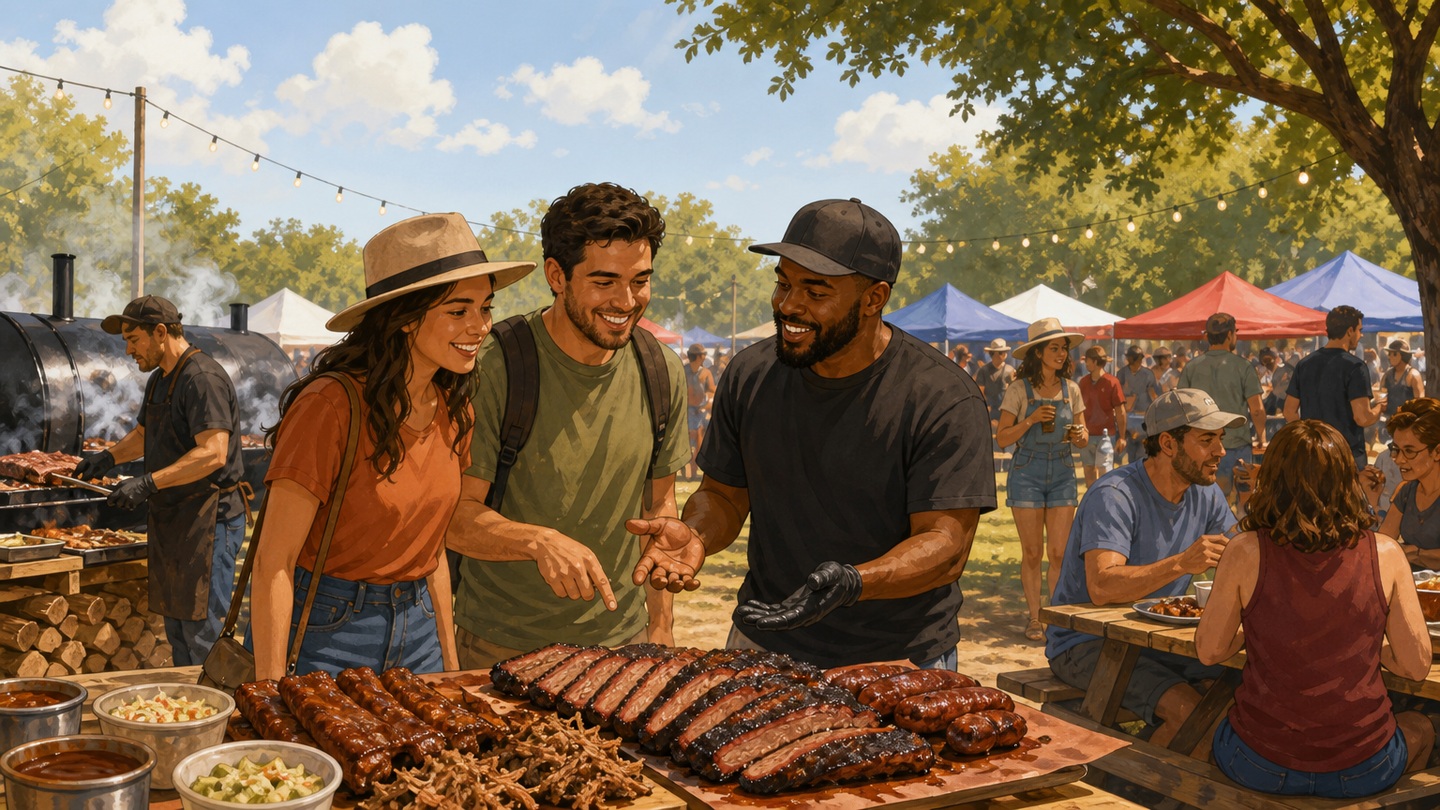
A Texas barbecue festival is more than a place to eat a plate of brisket. It is a chance to experience the many ways barbecue is cooked, served, judged, and celebrated across the state. For a first-time visitor, the scale can be surprising: smoke in the air, long lines at popular pits, cooks working around live fires, and crowds comparing bites with the seriousness usually reserved for sports.
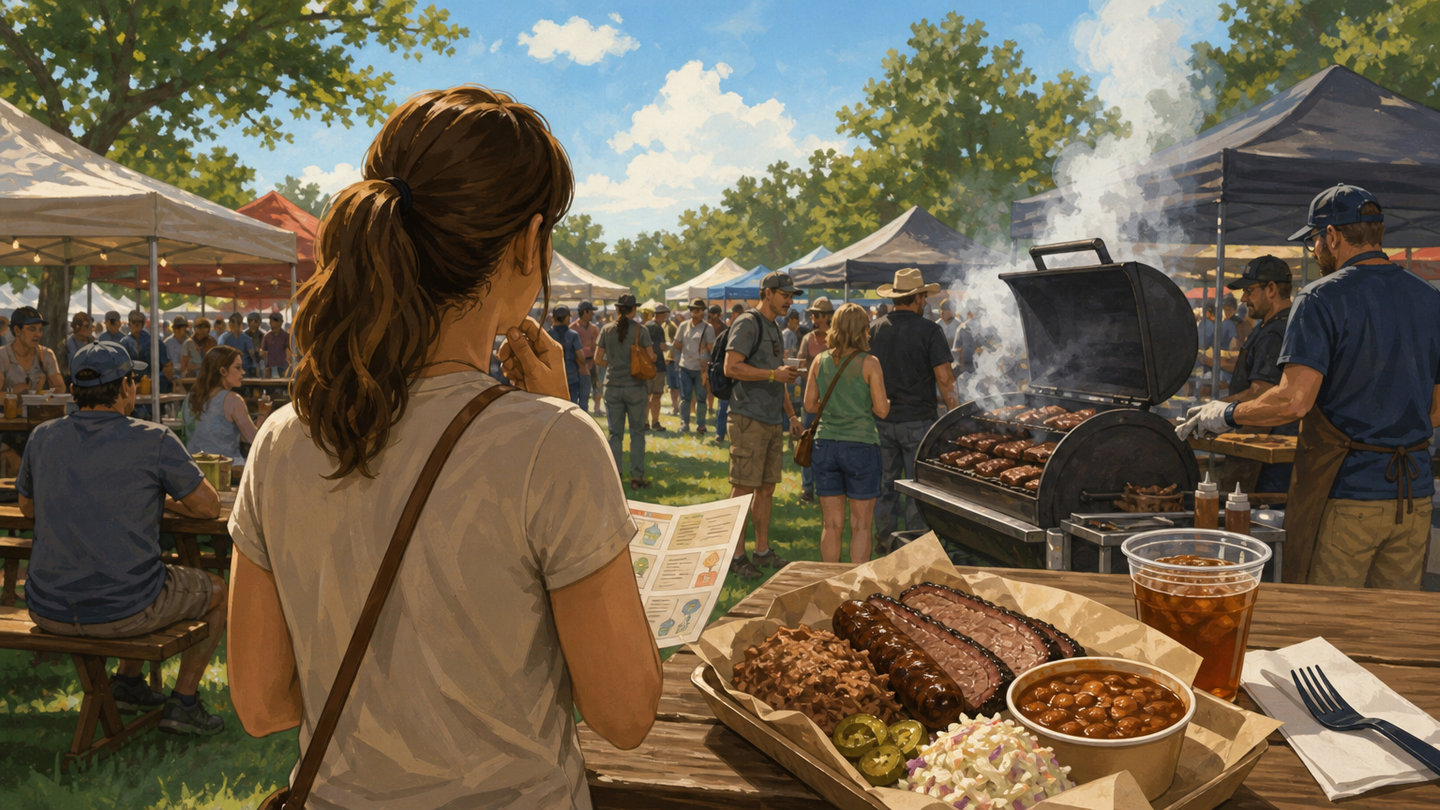
The best approach is to treat the event as an experience rather than a mission to taste absolutely everything. Arrive curious, pace yourself, and leave room for the styles and stories that make Texas barbecue worth gathering around.
Before the First Experience
Texas barbecue events do not all work the same way. Some are festivals built around tasting from a collection of barbecue restaurants. BBQ Fest in Lockhart, for example, has featured a Top 50 Picnic format that brought together barbecue joints from across Texas. An event like that gives a newcomer a broad snapshot of the state’s barbecue landscape in one outing.
Other gatherings center on teams competing in a cook-off. The World’s Championship Bar-B-Que Contest, presented by the Houston Livestock Show and Rodeo, is an invitation-only competition. That distinction matters: a contest can have active cook teams and private areas while also providing designated public places for visitors to enjoy food, music, and the atmosphere.
Knowing which kind of event you are attending shapes your expectations. A tasting-focused festival is often about sampling work from many established barbecue businesses. A competition is often about watching the culture of cooking teams, pits, camaraderie, presentation, and judging unfold. Both can be memorable, but they offer different paths into barbecue.
Do not build your day around the idea that one bite will settle what “real” Texas barbecue is. Texas barbecue has recognizable traditions, yet individual cooks and restaurants bring their own seasoning, wood, timing, meat selection, and serving style. A festival makes those differences easier to notice because you can try several approaches in a relatively short span.
What to Expect at Texas Barbecue Events
Expect smoke, heat, crowds, and a great deal of anticipation around the food. Barbecue is slow cooking presented at a busy public gathering, so the rhythm of the day can feel different from a standard restaurant meal. A line is often part of the experience, especially when people have gathered to try a particular pit or a limited offering.
The most useful skill is pacing. Start with smaller portions where possible, share tastes with companions, and pause between stops. Brisket is rich, ribs can be filling, and sausage, turkey, chicken, sides, and desserts add up quickly. Trying a manageable number of items with attention is more satisfying than racing through a long list and losing track of what you enjoyed.
Pay attention to the details in each serving. With brisket, notice the contrast between the dark exterior bark and the interior, along with the balance of smoke, seasoning, rendered fat, and beef flavor. With ribs, look for meat that is tender enough to bite cleanly while still holding its shape. Sausage offers another useful comparison point: the casing, seasoning, texture, and smokiness can vary widely from one maker to another.
Sides are not merely a break from meat. Beans, potatoes, bread, pickles, onions, and other accompaniments can show how a barbecue operation thinks about balance. Tangy or sharp elements can cut through richer bites, while a simple slice of bread can be part of the familiar barbecue table rather than an afterthought.
At a cook-off, the food may not be distributed in the same open, festival-style pattern that a newcomer expects. Some team spaces may be private, and public access can be organized around particular venues or activities. That is normal for an invitation-only contest. Enjoy the public portions for what they are instead of assuming every smoker or team area functions as a walk-up restaurant.
Questions Worth Asking
A good barbecue event rewards a few practical questions before you go. First, ask what the admission format includes. Some events are structured around tastings, while others may have separate food arrangements, public areas, or competition-related access. Understanding the format prevents disappointment and helps you plan how you will eat.
Ask whether the event is principally a festival, a competition, or a blend of both. This tells you whether your day is likely to revolve around sampling, watching cooks, listening to music, seeing demonstrations, or moving between several activities. It also clarifies why some areas may have different access rules.
Ask what food is actually available to the public and how it is served. A restaurant-focused gathering may make it easy to compare many barbecue joints, while a contest may showcase teams without making every team’s food generally available. There is no wrong format; it simply changes the kind of experience on offer.
If you are attending with family or friends, talk about goals before you arrive. One person may want to seek out brisket, another may care most about sausage or sides, and someone else may want the social scene. A loose plan keeps the group from waiting in the same line all day and gives everyone a reason to share what they discover.
Finally, ask yourself what you want to learn. You might compare bark, smoke, tenderness, sauces, or side dishes. You might want to see how cooks build community around their pits. Giving the day a simple focus turns a large, lively event into something easier to navigate.
Starting With Confidence
Your first Texas barbecue festival does not require expert knowledge or a perfected tasting strategy. Begin with an open mind and choose a few things to try deliberately. Take a moment to notice what you like: a peppery crust, a pronounced smoke flavor, a snappy sausage casing, a vinegary pickle, or a side that brings welcome contrast to the meat.
It also helps to accept that barbecue is social food. People discuss it, defend favorite styles, and disagree about what deserves the longest line. Join the conversation without feeling pressured to have a final verdict. A personal favorite is enough, and it may change as you try barbecue from more cooks and more parts of Texas.
The event itself is part of the pleasure. In a festival setting, the variety of participating barbecue joints can reveal how broad the state’s barbecue culture is. In a contest setting, the sight and sound of teams cooking can reveal the collaborative, competitive side of the tradition. Either way, you are seeing barbecue as a shared public ritual, not only as a meal.
Check the official event information shortly before you go, since access, programming, and food arrangements can change. Then arrive hungry but not rushed, sample with intention, and let your first gathering be the beginning of a longer Texas barbecue education.
Information may contain errors, omissions, or outdated details. Confirm time-sensitive information with the relevant official or authoritative source.