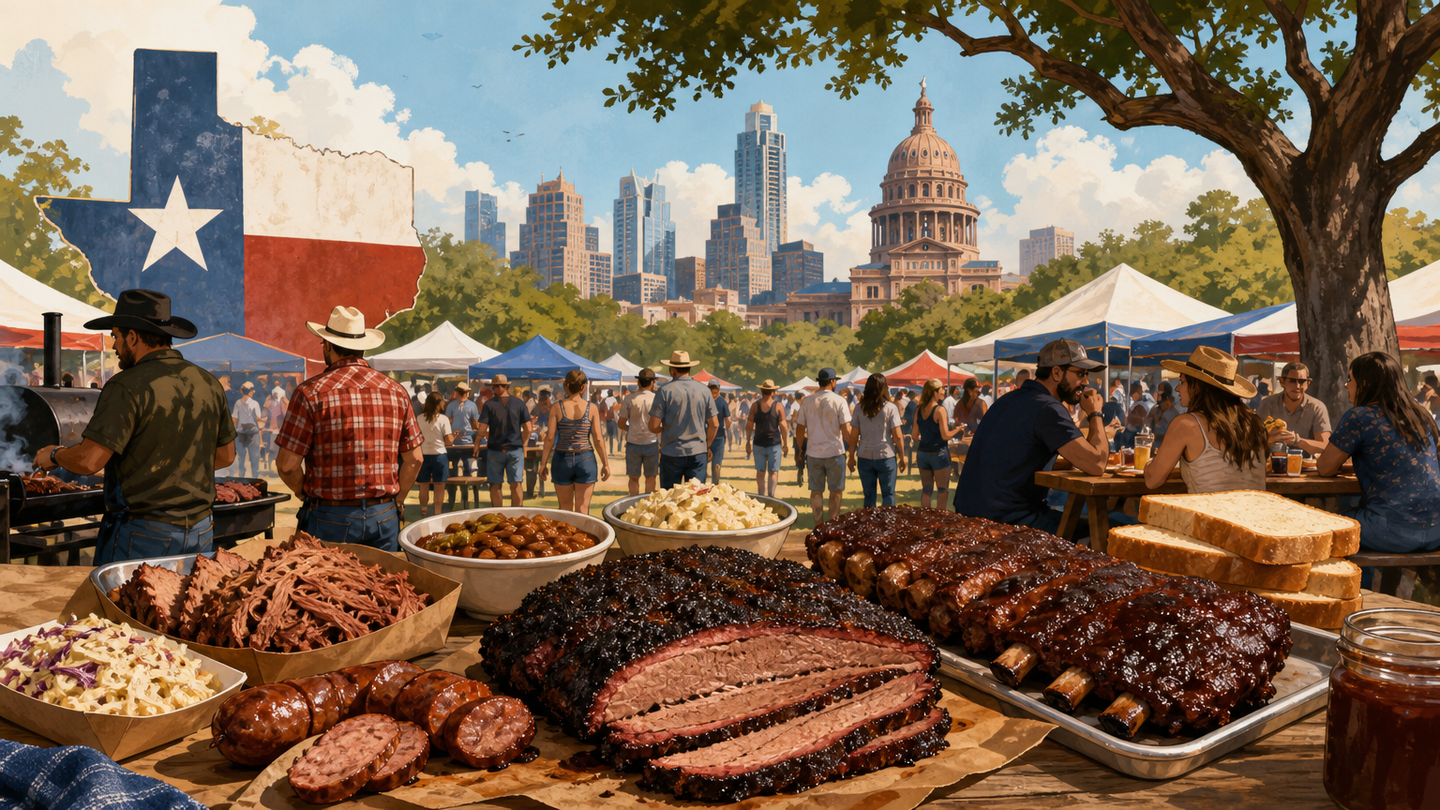
Texas barbecue events turn a meal into a shared occasion. Some are built around serious cook-off competition; others are designed for tasting barbecue from many respected joints in one outing. Together, they give visitors a useful way to experience the range of Texas barbecue culture: the craft of cooking over fire, the regional pride behind each pit, and the sociable pleasure of gathering around smoked meat.
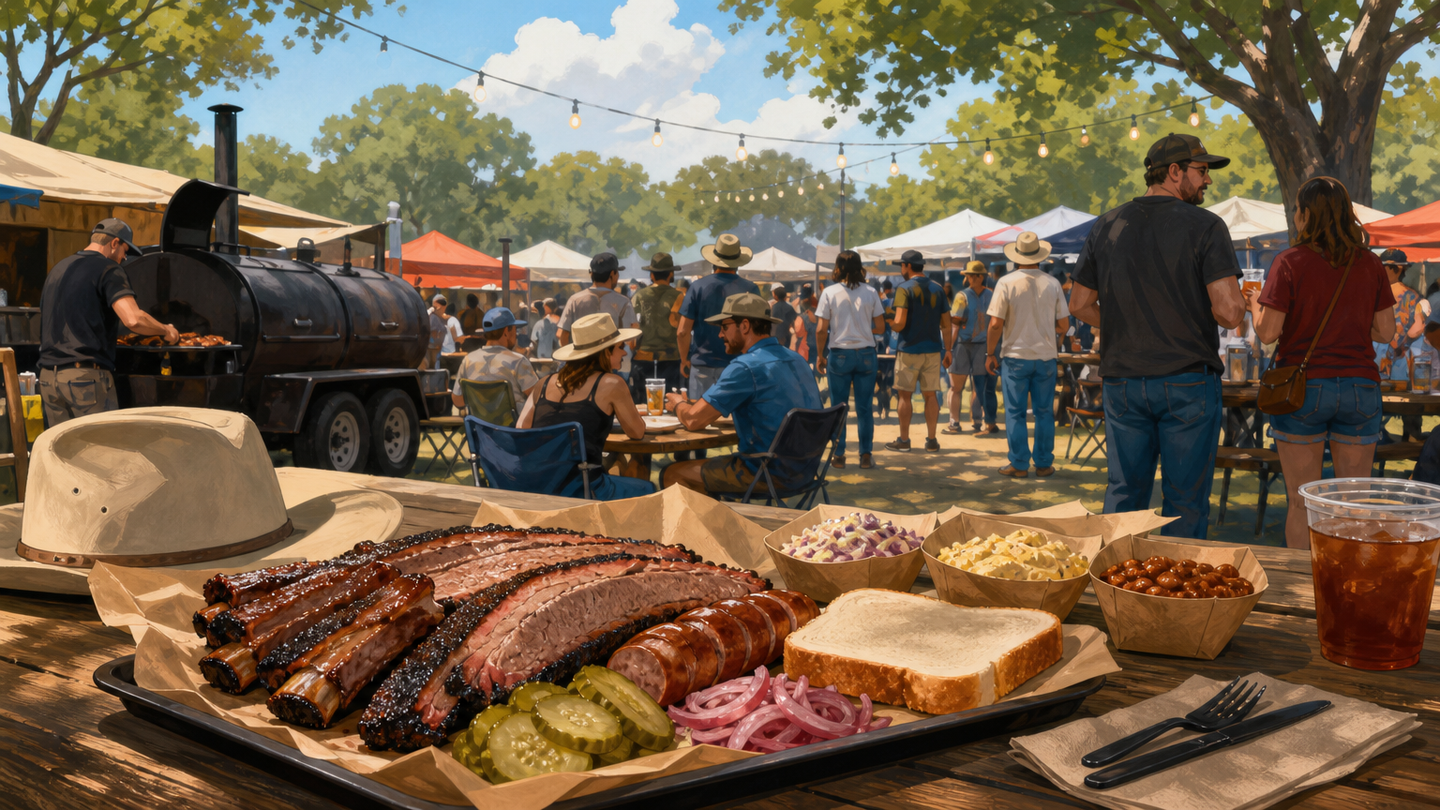
The best event for you depends less on finding the biggest name than on knowing what kind of experience you want. A competition, a tasting festival, and a barbecue-centered public celebration can all be memorable, but they ask different things of the visitor. Once you understand those differences, it is much easier to choose an outing that suits your appetite, pace, and travel plans.
Understanding Texas Barbecue Events
A barbecue cook-off or championship is centered on the cooking teams. The focus is the process as much as the finished food: pits, smoke, preparation, presentation, and the friendly intensity of competition. These gatherings can feel like a temporary community of cooks and supporters, with each team bringing its own traditions and style.
The World’s Championship Bar-B-Que Contest in Houston is a prominent example. Presented by the Houston Livestock Show and Rodeo, it is an invitation-only competition rather than an open tasting field where every cook team serves the general public. That distinction matters. Visitors can enjoy designated public venues, but access and food opportunities are shaped by the event’s structure. It is a strong choice for someone who wants to see the scale and spirit of a major Texas barbecue contest, not simply sample from every competing pit.
Tasting-focused festivals put the guest’s plate at the center. BBQ Fest in Lockhart, a Texas Monthly live event, represents this side of the calendar. A previous program included a Top 50 Picnic that brought barbecue joints from across Texas together. The appeal of a format like this is comparison: in a single setting, visitors can taste work from multiple barbecue businesses and notice how seasoning, smoke, texture, and side dishes vary from one stop to the next.
Neither format is inherently better. Competition events emphasize the communal spectacle surrounding barbecue; tasting festivals emphasize breadth and direct eating. Texas barbecue celebrations may also combine food with entertainment, family activities, vendors, or other programming. Think of barbecue as the reason for the gathering, then look at how the gathering is organized.
Choosing an Event That Fits Your Style
Start with your main goal. If you are drawn to pit craft, team culture, and the excitement of judging, a cook-off can be a better fit than a tasting festival. You may spend as much time watching, walking, and taking in the atmosphere as you do eating. That is part of the point: barbecue is being treated as a live craft and a competitive tradition.
If your goal is to learn what makes Texas barbecue so varied, prioritize an event where multiple established joints serve food to attendees. Sampling several plates close together gives you a clearer sense of contrast than eating one large meal. You might notice a brisket that leans heavily on smoke, another that foregrounds beef flavor, or side dishes that reveal how differently barbecue operations approach the rest of the tray.
Consider the Scale You Want
Large, high-profile events bring energy, visual spectacle, and an especially broad cross-section of attendees. They can also require more patience. Crowds, lines, walking, and sensory bustle are often inseparable from the experience. Go with an expectation that the event itself—not only the food—will occupy the day.
A smaller or more focused event may feel easier to navigate and more conducive to unhurried conversation and tasting. The trade-off can be a narrower range of barbecue or fewer activities around it. For families, first-time festival-goers, and visitors who prefer a calmer pace, that trade-off may be worthwhile.
Decide Whether You Want Discovery or Familiarity
A festival featuring many barbecue joints is ideal for discovery. It can introduce you to places you would not otherwise visit and help you decide which smokehouse deserves a future road trip. Approach it with curiosity rather than a mission to eat everything.
A cook-off can offer a different kind of familiarity: a closer view of how deeply barbecue brings people together. You may not leave with a definitive ranking of meats, but you can come away with a better feel for the pride, ritual, and generosity that surround Texas barbecue gatherings.
Practical Considerations for a Better Visit
The first planning question is access. Some events sell admission designed around tasting; others have public areas alongside private team spaces. Do not assume that a competition ticket or public entry automatically means access to every cook team or every food offering. The World’s Championship Bar-B-Que Contest is a useful reminder that even a very public barbecue event can have invitation-only competition spaces.
Next, plan your eating strategy. At a multi-vendor festival, start with a modest portion or shared sample when possible. Barbecue is rich, and early restraint leaves room for comparison later. Alternate richer bites with sides, water, and short breaks. The goal is not to finish every offering; it is to stay comfortable enough to taste with attention.
Comfort affects the day more than many people expect. Barbecue events often involve standing, walking, outdoor conditions, smoke, and a fair amount of time on your feet. Wear clothes and shoes that suit an active food outing. If you are traveling with children, older relatives, or anyone with mobility needs, favor an event layout and schedule that allow for breaks rather than treating the visit as a race.
It also helps to set one simple priority before arriving. Perhaps you want to try brisket from several places, find the most memorable sausage, enjoy the competition atmosphere, or introduce a friend to Texas barbecue. A clear purpose keeps a large event from feeling overwhelming while still leaving room for spontaneous discoveries.
Putting a Texas Barbecue Event to Good Use
Treat a barbecue festival as a tasting lesson. Pay attention to bark, rendered fat, smoke level, seasoning, tenderness, and the balance of each bite. There is no need to turn lunch into a formal scorecard, but a few mental notes can make the experience more rewarding. What seemed like a single category of food soon becomes a collection of distinct approaches.
Use the event to shape later travels, too. When a festival gathers joints from across Texas, it can become a practical map of future meals. A bite that stands out may point you toward a town, a pitmaster’s style, or a barbecue tradition worth exploring at its home base.
Most importantly, leave room for the social side of the experience. Texas barbecue is often remembered through the people around the table as much as through a particular slice of brisket. Whether you choose the competitive energy of Houston’s championship contest or the multi-joint tasting appeal associated with Lockhart’s BBQ Fest, the value lies in seeing barbecue as both food and gathering. Before making plans, confirm the current access rules, programming, and attendee information with the event’s official organizer.